Tuesday, December 6, 2011

Land of the Free?


<><> <><> <><><><> <><> <><><>“BOOM!”<> all of a sudden, you awake to the roar of a shotgun blast. Next comes a symphony of whistles combined with the adrenaline filled-commands from officers shouting, “Everybody on the ground, now!” To make things better, microphones grace your ears with a slower and more obnoxious version of a police siren. Slowly, you begin to put the pieces together as you struggle to roll over and catch a glimpse of the time on the alarm clock. With some assistance from your hands and the random cries of pain from next door, you manage to break the seal over your eyes and the enraging green numbers show 8:00 AM. The alarm stops, and the noise from your racing heart starts. A few moments later while staring at the ceiling you say to yourself, “Is today Sunday?” Then, a cold chill freezes your spine when you realize today is your only day off work for the week. This future of how miserable life can be living beside prisons isn’t so distant. Increasing crime rates, failure to rehabilitate convicts and a lack of space to put these criminals combine to form the problem faced by Americans today. Now you must be pondering, “Is this problem actually going to have an affect on my life of family?”

Rank Countries Amount
# 1 United States:2,019,234 prisoners
# 2 China:1,549,000 prisoners
# 3 Russia:846,967 prisoners
# 4 India:313,635 prisoners
# 5 Brazil:308,304 prisoners
# 6 Thailand:213,815 prisoners

              
America has more people behind bars than any other country in the world. According to recent statistics released by NationMaster.com, which is a statistics website comparing public information on different countries around the world, the United States ranks first in the total number of people behind bars with 2,019,234 prisoners. The only country close in comparison is China, which has 1,549,000 prisoners currently locked up. The problem should be apparent to everyone upon learning that there are only 1,558 overcrowded prisons. On average, one out of every thirty-two U.S. citizens are currently serving time in prison, on parole, or completing probation. Now, lets examine some examples of the current and future impact of prison failure.


               The first representation that comes to mind for the effects of this problem is the amount of recidivism in our country. The fundamental purpose of a prison is to correct and rehabilitate its inmates. However, the total number of convicts released that return within the trial period of three years is embarrassing. For the Pew Centers public safety performance project Jennifer Laudano states that slightly more than 4 out of 10 released prisoners cannot outlast the trial stage. Also, inmate life is becoming a battle for survival versus the safe environment needed. Gangs consume the prisons in America and when combined with a lack of space violence is inevitable for inmates.


The last effect of this problem is detriment toward the newly released citizens. Inmates are released into a society of rejection and receive little to with no help from our government to get back on their feet. As a result, these individuals struggle to get by or return to a life of crime. The pain and suffering felt by families is extremely hard to fully grasp without having lived the lifestyle. These hardships are best exemplified by former vice-presidential aide Lewis Libby, who reported,


               Our modern law and justice system supplies fuel to the fire that is our crime problem. The failure of our prison system is caused by three different factors. First, is the overpopulation of our prisons. This overpopulation is a state achieved by combining rising crime rates with America’s “hard on crime” attitude in regards to criminal punishment. Second, due to the lack of tax dollars spent toward actually helping inmates, my first instinct was to research whose benefiting from our loss and suffering. The fundamental purpose behind private prisons is great, which is better inmate care at lower operating costs for the government. However, they lack in comparison to state run prisons due to the hiring of inexperienced employees and paying limited operating expenses to maximize profits (Jackson). Since the prisons are privately owned through investors, all revenue spent on the prison is in a way that looks after their financial interests. Third, is the severe lack of rehabilitation provided to criminals inside of correctional facilities. Out of the $90,000 spent to house each inmate, only $1,612 dollars of that money is directed toward actual rehabilitation (eHow.com). In other words, the U.S. government rations the fund assisting inmates to reenter society. The key tools being hindered include academic education, vocational training, and substance abuse programs.

               Now that we’ve looked at what isn’t being done in the prisons the solution to these problems isn’t going to be found and accomplished swiftly. You shouldn’t need to ask yourself if you’re willing to pay your hard-earned money for the government to simply waste it. At this rate, prisons are going to overrun the country and everyone can be blessed with pleasant wake up calls on their day off.


               In order to have a functioning prison system the first action required is law reform. By modifying low level laws to be more lenient and consistent involving different forms of probation in relation we can greatly reduce prisoner intake. Mark Kleiman, the Professor of Public Policy in the UCLA School of Public Affairs, argues that the justice system functions through harsh and inconsistent punishment operated by warnings creates a false sense of safety for the criminal until action is finally taken. Also, state laws need to be reformed in regards to the prison capacity. Overpopulation in prisons is evident in the entire state and federal level endangering the lives of inmates and staff. In “U.S. Prisons: HowCrowded Are They?” Charles Montaldo states, “...some are as much as 33 percent higher than their official capacities.” By operating prisons at planned capacity chances for successful rehabilitation would be much higher. It will be difficult to get new legislation passed, but the government is clearly aware of the severity of the problem and the only thing slowing their solution is money.


               Part two of my solution provides the means not only fix the problem, but to in fact reverse it. By establishing new and revised rehabilitation programs for prisoners and released convicts it will lower the rate of recidivism. Douglas S. Lipton wrote the book The effectiveness of treatment for drug abusers under the criminal justice system and reported after examining the history of treatment for inmates the best program within prisons are therapeutic communities.


Therapeutic communities provide support and advice to help stay off drugs and away from violence after leaving prison. By making these communities mandatory within the prison and for the duration of the trial period upon leaving combined with better programs to find ex-convict jobs, the potential for crime reduction is immeasurable. The opposition to this solution is that we don’t have the funds to pay for these programs now. However, I know making the investment on these programs now is much cheaper than our near future. Lewis Libby was quoted by Robert Milliken as saying, “The prisonpopulation is projected to grow by another 192,000 in five years, at a cost of$27.5 billion to build and operate additional prisons” (Mikkelsen). So how is the problem reversed?
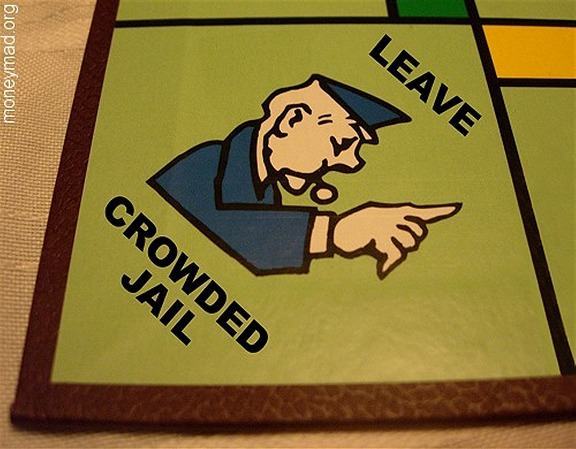

               The last step to be made to move forward is to simply increase the size of the prisons. Once the states reduce their recidivism rates by just ten percent the government will save a total of $635 million in prison costs in just one year (Laudano). This is plenty of money to jumpstart this program. While increasing the size of the prisons you can bring back the necessary atmosphere needed to correct the inmates. With the increase in funding for rehabilitation methods will only improve and save tax payers more and more cash fueling the new fire that is the crime solution.


               America is quickly evolving from the “land of the free” to the “home of the incarcerated.” It is only human nature to be scared of change, but we cannot be scared to act now. Our country has let the fear of losing money and crawling deeper into debt hinder the ability to invest wisely for the future. My solution to this problem requires a lot of work on many different levels of government, but the prison system won’t fix itself any time soon.

Wednesday, November 30, 2011

Video Source

On August 26, 2010 uploaded the video Filling Up Prisons Without Fighting Crime: Mark Kleiman on America's Criminal Justice System. In this video Kleiman expresses his anger toward the fact that there is too much crime in the U.S. and having way too many people in prison. He argues that the high incarceration rate is not the solution to crime; instead, its the method by which we punish these criminals. The harsh and inconsistent punishment which is operated by warnings that create a false sense of safety for the criminal until they finally take action which is severe and causing overpopulation in prisons and the rising crime rate.

I chose this video because it provides an intelligent perspective on a very plausible solution to the faults in our justice system. Also, it is less expensive than a lot of different methods. By simply modifying some low level laws we can in theory kill two birds with one stone.

Tuesday, November 29, 2011

Book Source

Douglas S. Lipton wrote the book The effectiveness of treatment for drug abusers under criminal justice supervision, which was published in Washington, D.C. in 1996. In summary, the book tells how the percentage of inmates in the prison system that are substance abusers is very high and has gotten larger in recent years. Lipton analyzes the history of rehabilitation and treatment for drug abuser in the prison system through investigating the relationships of crime to drugs, the current overcrowded situation in the prisons, and the latest treatment provided to the inmates. It found that therapeutic communities along with in-custody treatment can be extremely effective in the prevention of rearrest.With this method success is drectly influenced by time spent in the program.

I chose this book because it provides a proven solution to my problem which is the failure of the prison system to correct its inmates.

Wednesday, November 16, 2011

Journal article


William Spellman wrote the journal article Specifying the Relationship Between Crime and Prisons which was published by the Journal of Quantitative Criminology  in June of 2008. In this article Spellman tells of the results he found when trying to find the actual formula for the crime equation to be presented to a panel of U.S. states. Specifically, specifying the relationship between crime and prisons while still noting the variable of prison population. Spelman then took tests from different researchers on previous data sets and got different results. These results will most likely lead to different implications for public policy; meanwhile, the specifics behind the formula certainly have changed. However, when using the latest methods to find the formula Spelman found that prison and crime aren't correlated and crime determines the size of prison populations. In other words, the best formula must come from differenced data and instrumental variables and failing to do so will result in spastic results.

 I chose this article because it serves as the leading counter argument to the solutions of my problem, which is that the prison system is in fact responsible for not correcting its inmates and thus only adding to the negative cycle and future.

Tuesday, October 4, 2011

Blog #5

October 4, 2011

Our Money to Government Pockets 

Josh Jackson wrote the article "Prison Payola", which was published in the magazine Next American City during fall of 2007.

In this article "Prison Payola" Josh Jackson explains how private prisons work and how they arent doing what their supposed to be doing, helping keep out repeat offenders. These private prisons alsotear apart cities and homes because they benefit off how people they have incarcernated so they dont  really care about fixing the inmates. Private prisons are more worried about there stockholders profits instead of helping fix the people inside there prisons. For instance like not worring about fixing food or staying conditions instead just worrying about the profits of keeping the inmates incarcerated.

I choose this article because it is an example of how prisons dont work and are more about profiting off inmates then helping them when they get back into the community.

Thursday, September 29, 2011

Context:

Genre: Newspaper article

URL: http://www.washingtonpost.com/wp-dyn/content/article/2006/06/07/AR2006060702050.html

"Title of Part": US Prison Study Faults System and the Public

Title of Whole: The Washington Post


Author: Peter Slevin

Date Published: June 8, 2006

Content:
      In the article "US Prison Study Faults System and the Public" by Peter Slevin  illustrates that the prison systems in the US are not only failing the large number of adults that pass through them, but the public is also failing the sytems as well. He states that politicians don't fully understand prison life "behind bars" or funding for programs to help the transition back to a life in society. Even data that would support the astonishing statistics is no where to be found. What sticks out most to me in this article is  a "desperate need for the kinds of productive activities that reduce violence and make rehabilitation possible." This report was then given to a commission of government officials to take a look on just what to do about the problem.


Rationale: I chose this article because it states in other words that there are no statistics to back up why the US prison systems are failing to perform there job at such an alarming rate. 

Tuesday, September 20, 2011

Blog#3

Genre:  .gov article
“Title of Part”: “Helping Inmates Return To The Community”
Title of Whole: IDU HIV Prevention
Author: Academy for Educational Development
Date Published: August 2001
Summary:          
In this report produced by the Academy for Educational Development a variety of information is presented displaying one of the largest problems for prisoners in the United States today, which is the transition. The report clearly states that inmates must be provided with successful transition services in order to avoid a return to drugs and crime. One of the best pieces of information provided by the report was the description of returning to freedom for inmates and all of the challenges they face. This ranges from having no money, housing, or health insurance. From this point onward the article goes into depth about the various factors that go into making sure the transition process is a smooth one. The main problems with transition services today would be coverage, accessibility, and of course the quality of the programs. In terms of coverage, the services aren’t reaching enough convicts to make any kind of difference. The accessibility of these programs deters many inmates, because combined with either needing a referral or payment inmates are just simply unaware of their location. Finally, whether the provisions and employers provided are adequate to create a long lasting effect.
Rationale:
                I choose the report “Helping Inmates Return To The Community” because it was bold, direct, and truthful about the actual success of inmate transition back into our society. Also, he went in depth beautifully addressing every level of the problem below the service. Not only did the author of this article address the problem, but depicted strategies and programs attempting to fix the problem.

Monday, September 5, 2011

Success Rate of the U.S. Prison System

For my topic I have chosen to research whether or not the prison system in the United States is performing at successful levels when it comes to the convict return rate. Also, if the environment within our prisons is a healthy habitat for the rehabilitation of these criminals. This problem directly effects everyone because fixing the weak areas in this system has the potential to reduce crime rates in the United States and then other countries around the world.