<><> <><> <><><><> <><> <><><>“BOOM!”<> all of a sudden, you awake to the roar of a shotgun blast. Next comes a symphony of whistles combined with the adrenaline filled-commands from officers shouting, “Everybody on the ground, now!” To make things better, microphones grace your ears with a slower and more obnoxious version of a police siren. Slowly, you begin to put the pieces together as you struggle to roll over and catch a glimpse of the time on the alarm clock. With some assistance from your hands and the random cries of pain from next door, you manage to break the seal over your eyes and the enraging green numbers show 8:00 AM. The alarm stops, and the noise from your racing heart starts. A few moments later while staring at the ceiling you say to yourself, “Is today Sunday?” Then, a cold chill freezes your spine when you realize today is your only day off work for the week. This future of how miserable life can be living beside prisons isn’t so distant. Increasing crime rates, failure to rehabilitate convicts and a lack of space to put these criminals combine to form the problem faced by Americans today. Now you must be pondering, “Is this problem actually going to have an affect on my life of family?”
| Rank | Countries
 | Amount  | |
|---|---|---|---|
| # 1 |  United States: | 2,019,234 prisoners | |
| # 2 |  China: | 1,549,000 prisoners | |
| # 3 |  Russia: | 846,967 prisoners | |
| # 4 |  India: | 313,635 prisoners | |
| # 5 |  Brazil: | 308,304 prisoners | |
| # 6 |  Thailand: | 213,815 prisoners |
America has more people behind bars than any other country in the world. According to recent statistics released by NationMaster.com, which is a statistics website comparing public information on different countries around the world, the United States ranks first in the total number of people behind bars with 2,019,234 prisoners. The only country close in comparison is China, which has 1,549,000 prisoners currently locked up. The problem should be apparent to everyone upon learning that there are only 1,558 overcrowded prisons. On average, one out of every thirty-two U.S. citizens are currently serving time in prison, on parole, or completing probation. Now, lets examine some examples of the current and future impact of prison failure.
The
first representation that comes to mind for the effects of this problem is the
amount of recidivism in our country. The fundamental purpose of a prison is to
correct and rehabilitate its inmates. However, the total number of convicts
released that return within the trial period of three years is embarrassing. For
the Pew Centers public safety performance project Jennifer Laudano states that
slightly more than 4 out of 10 released prisoners cannot outlast the trial
stage. Also, inmate life is becoming a battle for survival versus the safe
environment needed. Gangs consume the prisons in America and when combined with
a lack of space violence is inevitable for inmates.
The last effect of this
problem is detriment toward the newly released citizens. Inmates are released
into a society of rejection and receive little to with no help from our
government to get back on their feet. As a result, these individuals struggle
to get by or return to a life of crime. The pain and suffering felt by families
is extremely hard to fully grasp without having lived the lifestyle. These
hardships are best exemplified by former vice-presidential aide Lewis Libby,
who reported,

Our
modern law and justice system supplies fuel to the fire that is our crime
problem. The failure of our prison system is caused by three different factors.
First, is the overpopulation of our prisons. This overpopulation is a state achieved
by combining rising crime rates with America’s “hard on crime” attitude in
regards to criminal punishment. Second, due to the lack of tax dollars spent
toward actually helping inmates, my first instinct was to research whose
benefiting from our loss and suffering. The fundamental purpose behind private
prisons is great, which is better inmate care at lower operating costs for the
government. However, they lack in comparison to state run prisons due to the
hiring of inexperienced employees and paying limited operating expenses to
maximize profits (Jackson). Since the prisons are privately owned through
investors, all revenue spent on the prison is in a way that looks after their
financial interests. Third, is the severe lack of rehabilitation provided to
criminals inside of correctional facilities. Out of the $90,000 spent to house
each inmate, only $1,612 dollars of that money is directed toward actual
rehabilitation (eHow.com). In other words, the U.S. government rations the fund
assisting inmates to reenter society. The key tools being hindered include
academic education, vocational training, and substance abuse programs.
Now that
we’ve looked at what isn’t being done in the prisons the solution to these
problems isn’t going to be found and accomplished swiftly. You shouldn’t need
to ask yourself if you’re willing to pay your hard-earned money for the
government to simply waste it. At this rate, prisons are going to overrun the
country and everyone can be blessed with pleasant wake up calls on their day
off.
In order
to have a functioning prison system the first action required is law reform. By
modifying low level laws to be more lenient and consistent involving different
forms of probation in relation we can greatly reduce prisoner intake. Mark Kleiman,
the Professor of Public Policy in the UCLA School of Public Affairs, argues
that the justice system functions through harsh and inconsistent punishment
operated by warnings creates a false sense of safety for the criminal until
action is finally taken. Also, state laws need to be reformed in regards to the
prison capacity. Overpopulation in prisons is evident in the entire state and
federal level endangering the lives of inmates and staff. In “U.S. Prisons: HowCrowded Are They?” Charles Montaldo states, “...some are as much as 33 percent
higher than their official capacities.” By operating prisons at planned
capacity chances for successful rehabilitation would be much higher. It will be
difficult to get new legislation passed, but the government is clearly aware of
the severity of the problem and the only thing slowing their solution is money.

Therapeutic communities provide support and advice to help stay off drugs and away from violence after leaving prison. By making these communities mandatory within the prison and for the duration of the trial period upon leaving combined with better programs to find ex-convict jobs, the potential for crime reduction is immeasurable. The opposition to this solution is that we don’t have the funds to pay for these programs now. However, I know making the investment on these programs now is much cheaper than our near future. Lewis Libby was quoted by Robert Milliken as saying, “The prisonpopulation is projected to grow by another 192,000 in five years, at a cost of$27.5 billion to build and operate additional prisons” (Mikkelsen). So how is the problem reversed?
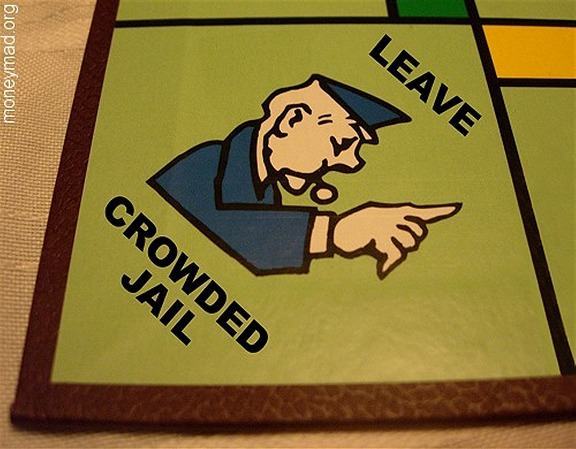
The last
step to be made to move forward is to simply increase the size of the prisons.
Once the states reduce their recidivism rates by just ten percent the
government will save a total of $635 million in prison costs in just one year (Laudano).
This is plenty of money to jumpstart this program. While increasing the size of
the prisons you can bring back the necessary atmosphere needed to correct the
inmates. With the increase in funding for rehabilitation methods will only
improve and save tax payers more and more cash fueling the new fire that is the
crime solution.
America
is quickly evolving from the “land of the free” to the “home of the
incarcerated.” It is only human nature to be scared of change, but we cannot be
scared to act now. Our country has let the fear of losing money and crawling
deeper into debt hinder the ability to invest wisely for the future. My
solution to this problem requires a lot of work on many different levels of
government, but the prison system won’t fix itself any time soon.
